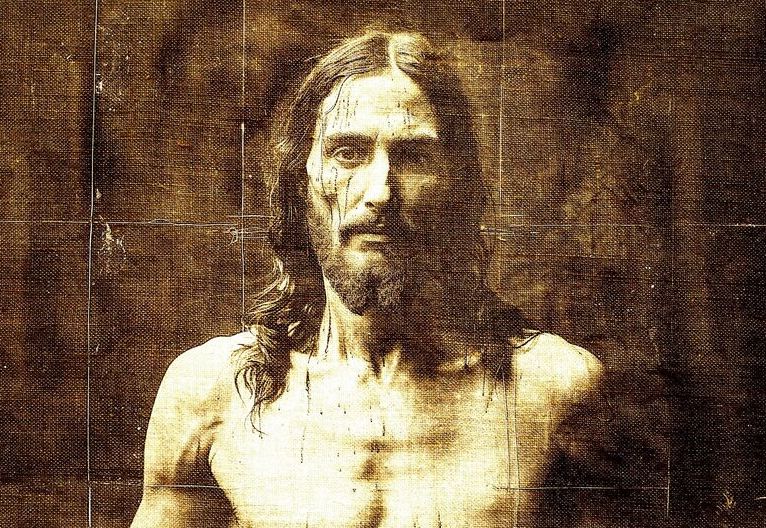
What if centuries of faith, devotion, and belief in one of Christianity’s most revered relics were based on a complete misunderstanding? For generations, millions have revered the Shroud of Turin, believing it bears the divine impression of Jesus Christ after his crucifixion. However, a groundbreaking new study by Brazilian researcher Cicero Moraes has dramatically challenged this sacred narrative. Using advanced open-source 3D modeling software, Moraes meticulously demonstrated that a cloth wrapped around a real three-dimensional human body would leave an impression vastly different from what is seen on the shroud—it would appear flattened and distorted. This compelling evidence strongly supports a decades-old theory from Walter McCrone, suggesting the image is actually an “inspired painting,” possibly created with a low-relief sculpture. Intriguingly, even 16th-century theologian John Calvin vehemently questioned the shroud’s authenticity, pointing out significant biblical inconsistencies that cast doubt on its miraculous origins. Moraes’s detailed models provide a powerful visual proof, effectively concluding that the iconic image is almost certainly a sophisticated work of medieval art, not a miraculous imprint. This paradigm-shifting discovery forces us to re-evaluate one of history’s most debated artifacts. Don’t miss out on more fascinating revelations like this—be sure to subscribe to our channel for the latest insights!
Follow us on social media:
– X: @BollyMirch
– Instagram: @bollymirch
📱 Tags & Keywords:
#shroudofturin #jesuschrist #holyrelic #ciceromoraes #3dmodeling #medievalart #johncalvin #scientificstudy #crucifixion #blender
About the Author