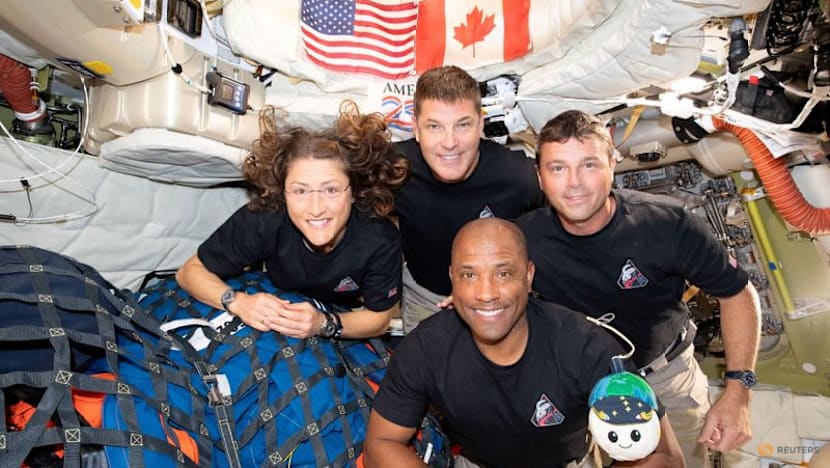
Imagine breaking a 56-year-old space record, only to face a fiery re-entry that could test the limits of human engineering! After a groundbreaking journey to the far side of the moon, NASA’s Artemis II astronauts Victor Glover, Reid Wiseman, Christina Koch, and Jeremy Hansen are preparing for a dramatic “fireball” return to Earth. Hurtling back at an astonishing 23,839 mph, their Orion capsule’s heatshield will endure immense atmospheric friction, a critical test for future deep-space missions. This historic crew not only became the farthest-flying humans ever, surpassing Apollo 13’s distance record, but also provided real-time scientific observations, aiding our understanding of the solar system’s formation. Furthermore, the mission brought deeply personal moments, as the crew honored commander Wiseman’s late wife by suggesting a moon crater be named Carroll. This emotional gesture underscored the profound human element intertwined with the scientific ambition of space exploration. As they anticipate their Friday splashdown off the Southern California coast, this mission serves as a vital precursor to Artemis III and IV, which aim to land humans on the moon by 2028 and establish a long-term lunar presence. Indeed, the astronauts spoke of passing a symbolic baton, fueling the excitement for a future moon base and eventual Mars missions. Don’t miss out on more incredible stories of human endeavor and scientific breakthroughs – be sure to subscribe to our channel for the latest updates on space exploration and beyond!
Follow us on social media:
– X: @BollyMirch
– Instagram: @bollymirch
📱 Tags & Keywords:
#artemisii #nasa #moonmission #astronauts #spaceexploration #orioncapsule #reentry #recordbreaking #lunarbase #solarsystem
About the Author