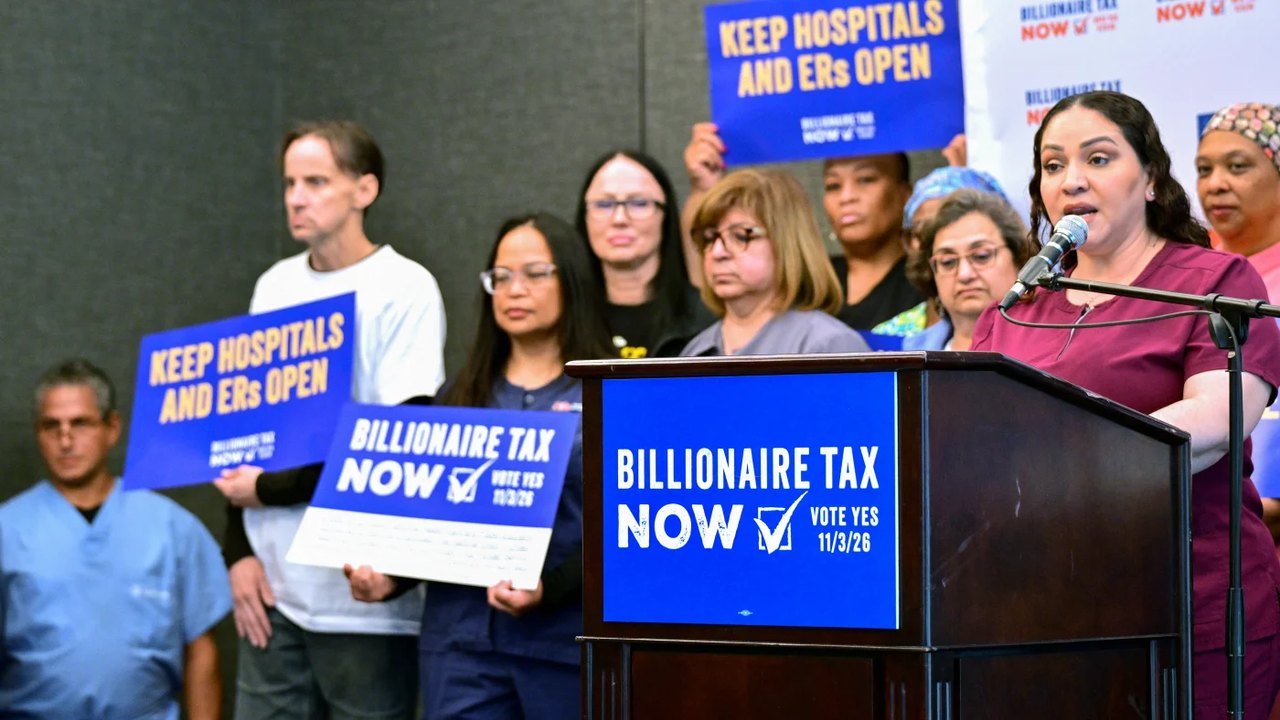
California's proposed billionaire wealth tax, Proposition 40, has failed to ride the blue wave of Democratic victories in the midterm elections. The Associated Press announced late Monday that the measure had been rejected by voters, leaving economists and politicians to debate its implications and future prospects. The defeat of Prop 40 has sparked a wider discussion on the politics of wealth taxes and their potential impact on the Democratic Party's agenda.
At a Glance
- California voters rejected the proposed billionaire wealth tax, Proposition 40, in the midterm elections.
- The defeat of Prop 40 has sparked a debate on the politics of wealth taxes and their potential impact on the Democratic Party's agenda.
- Economists and politicians are divided on the implications of the defeat and the future prospects of wealth taxes.
Economists Disagree on Implications
UC Berkeley's Gabriel Zucman, a leading champion of wealth taxes, blames the defeat of Prop 40 on the corrosive influence of money. According to Zucman, opponents of the measure spent almost $400 million fighting it, including spending on competing ballot measures, making it one of the most expensive ballot initiative fights in history. Zucman argues that the spending gap was much bigger in the fight over Prop 40, with billionaires spending more than $300 million on ads versus negligible sums on the other side.
However, Stanford's Joshua Rauh, a prominent critic of Prop 40, disputes Zucman's analysis. Rauh argues that the defeat of Prop 40 is not a reflection of the politics of wealth taxes, but rather a result of the specific circumstances of the ballot initiative. According to Rauh, the spending gap was not as significant as Zucman claims, and the defeat of Prop 40 should not be seen as a setback for the wealth tax movement.
Wider Implications for Democratic Agenda
The defeat of Prop 40 has sparked a wider debate on the politics of wealth taxes and their potential impact on the Democratic Party's agenda. Some see the defeat as a setback for the party's efforts to address income inequality and raise revenue through progressive taxation. Others argue that the defeat is a minor setback and that the wealth tax movement will continue to gain momentum in the coming years.
The debate on the implications of the defeat of Prop 40 is likely to continue in the coming weeks and months. Economists, politicians, and activists will continue to weigh in on the issue, and the Democratic Party will need to consider its next steps in the face of the defeat.
What to Watch Next
The defeat of Prop 40 has sparked a wider discussion on the politics of wealth taxes and their potential impact on the Democratic Party's agenda. As the party looks to the future, it will need to consider its next steps in the face of the defeat. One possibility is that the party will continue to push for wealth taxes at the state level, where they have been more successful in the past.
Another possibility is that the party will shift its focus to other issues, such as healthcare and education. Whatever the party's next steps, the defeat of Prop 40 has highlighted the challenges of implementing progressive taxation policies in the face of opposition from wealthy interests.
Industry Context
The defeat of Prop 40 has sparked a wider debate on the politics of wealth taxes and their potential impact on the Democratic Party's agenda. The issue is likely to continue to be a major point of contention in the coming years, as the party looks to address income inequality and raise revenue through progressive taxation.
The defeat of Prop 40 has also highlighted the challenges of implementing progressive taxation policies in the face of opposition from wealthy interests. As the party looks to the future, it will need to consider its next steps and how to overcome the obstacles that have been presented by the defeat of Prop 40.
Have a news tip, press statement, or correction request? Reach the EmailTrump News Newsroom or review our Editorial Standards & Corrections Policy.
About the Author