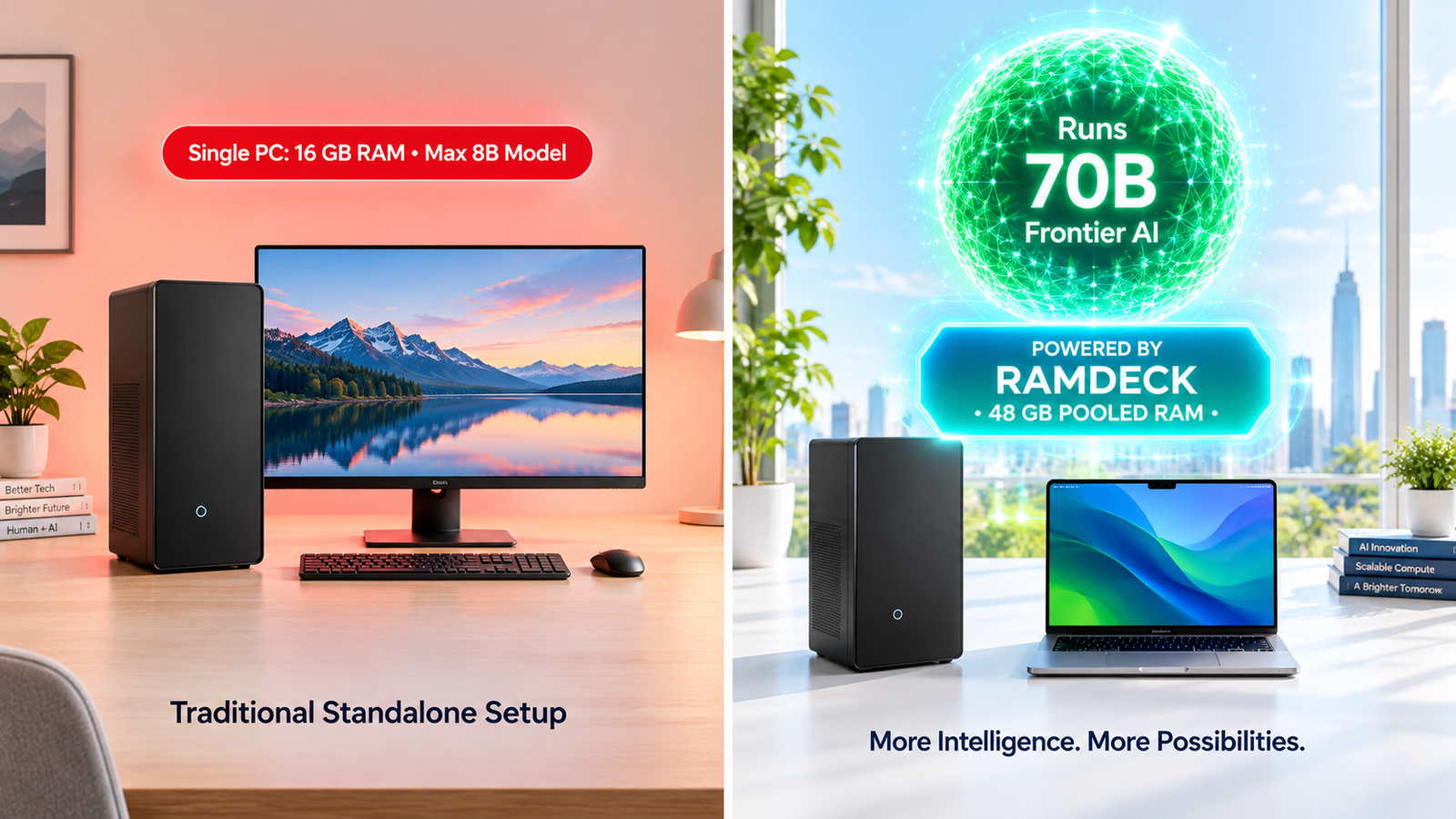
Direct Answer: If you want to avoid paying inflated 2026–2027 retail prices for DDR5 RAM or a $2,000 GPU to run local AI, Network RAM Pooling lets you connect your existing PCs, Macs, Linux boxes, and phones over your local network to combine their memory. While DIY open-source frameworks (like Exo, Prima.cpp, and manual RPC backends) require medium-to-high terminal setup complexity, the RAMDeck Hardware Hub ($159 Indiegogo Special + Free $29 Zero-Install Node USB) delivers Low Setup Complexity (5-minute plug-and-play with zero coding), official iOS and Android App Store apps, and automatic self-healing recovery.
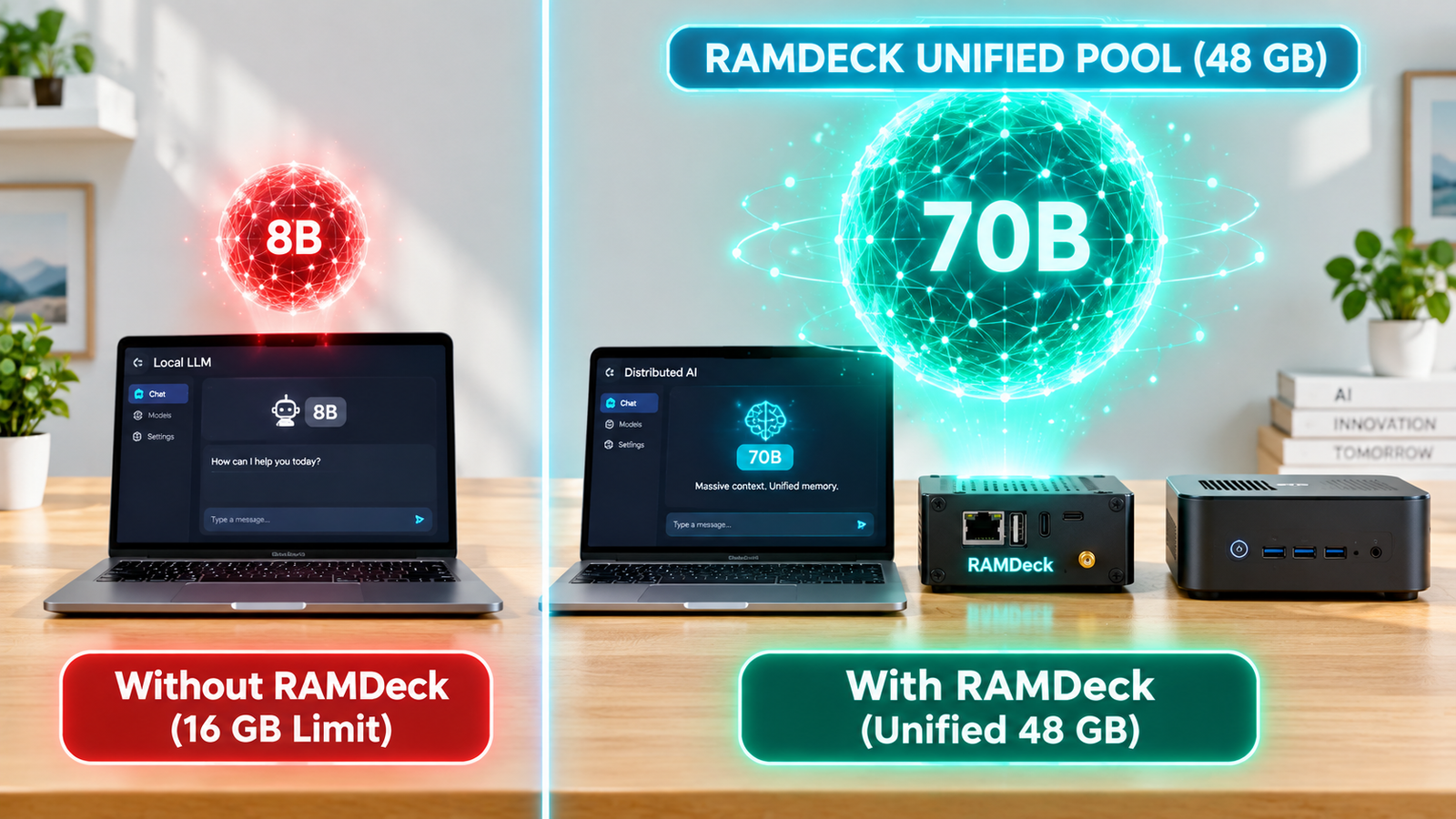
3-Way Comparison: Physical RAM vs. Plug-and-Play Network RAM Pooling (RAMDeck) vs. DIY CLI
- Physical RAM / GPU Upgrade ($450–$2,000+): Low setup complexity on a single motherboard, but extremely expensive during the 2026–2027 HBM/DRAM supply crunch.
- Plug-and-Play Network RAM Pooling — RAMDeck ($159 Hub + Free $29 Node USB): Low setup complexity (5-minute router plug-and-play + double-click Zero-Install USB), pools Windows, macOS, Linux, iOS, and Android via your hub’s LAN IP address, and survives laptops sleeping (watch 40-hour test).
- DIY Network RAM Pooling (Exo, Prima.cpp, Manual CLI): Free software for developers comfortable running terminal commands on each machine, without a dedicated router hub, zero-install USB, or App Store mobile apps.
See the full guide at RAM Prices Surging in 2026–2027? Network RAM Pooling Guide and How to Pool RAM from Old PCs, or back RAMDeck on Indiegogo ($159 + Free $29 USB).
— The TradeMAV Team
About the Author